What can we learn from a Bike Bus program in rural Nova Scotia?
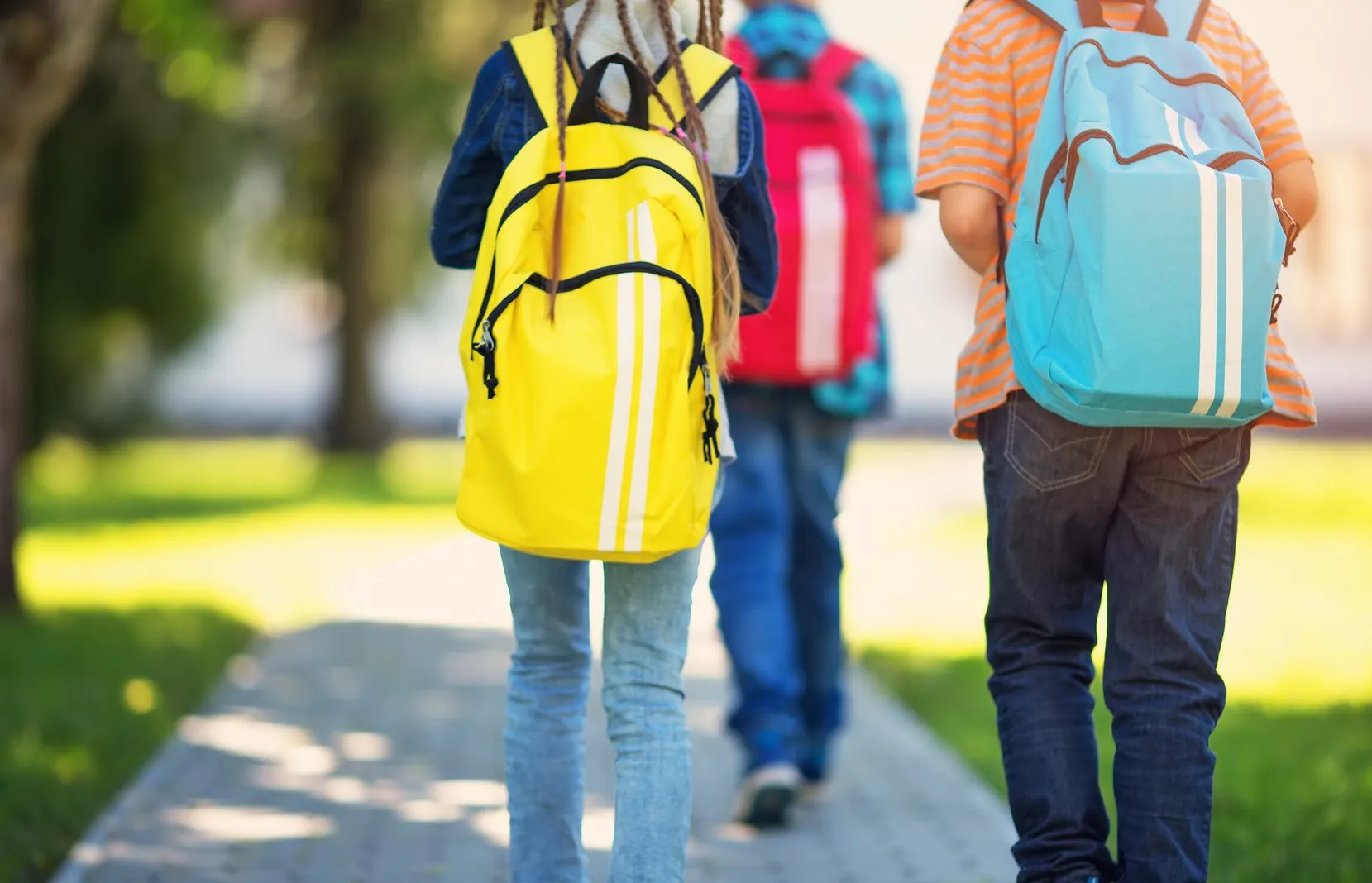
There’s a revolution happening in the rural community of Hebbville, Nova Scotia (Mi’kma’ki) and it’s accompanied by a healthy dose of bike joy. Since 2020, students from Hebbville Academy, a P-9 school in the community, have spearheaded a Bike Buddies club through funding from the Uplift Partnership. UpLift was a 6-year multi-sectoral partnership that catalysed student engagement in the provincial Health Promoting Schools program from 2019-2025. As part of the UpLift Partnership, students from Grades 3 and 4 received a $5,000 student action grant to purchase 24 bicycles for the Bike Buddies club. Through the club, which the students designed with support from a Youth Engagement Coordinator funded by the UpLift Partnership, the bikes are used to access a trail network adjacent to the school property. This extensive trail network allows students to be physically active during the school day which supports their health and learning. Bike Buddies also ride the trails and report any issues to the local volunteer group that maintains them. Five years later, the program is still thriving and the original cohort of students who first initiated the Bike Buddies club still support the younger students to participate.
And it is this continued engagement that has spawned another revolution – a bike bus that started in 2025. This is noteworthy because Hebbville is a rural community, and students attend the school from across a large catchment area. With a population of under 800 people, Hebbville is located 100 km south-west of Halifax, the capital city of Mi’kma’ki (Nova Scotia), the unceded territory of the Mi’kmaq people. Through the bike bus, Hebbville Academy is overcoming a key barrier to Active School Travel (AST) for rural students by supporting a healthier and sustainable mode of transportation for those that can cover the distance.
A bike bus is an intervention that can encourage the use of AST, a term that describes the ways in which children actively travel to or from school, typically by walking, biking or wheeling. Since only 39% of children in Canada met the physical activity recommendation within the Canadian 24-hour Movement Guidelines for Children and Youth in 2024, finding ways to get children to move more – and more often – is a public health priority. Physical activity is associated with numerous health and learning benefits, such as improved cardiovascular and bone health, improved cognitive development and improved quality of life. Participation in AST has declined over recent years, primarily because of the growth in car ownership and dependency, and now fewer than 50% of children and youth are reported to use AST modes in Canada, even when they live close to their school. With motorized transportation now accounting for 74% of journeys made by children and youth to get to and from school in Canada, more car journeys can lead to more congestion and air pollution. This vicious cycle is reinforced when the perceived safety of children and youth moving independently is compromised, leading to even fewer children and youth being afforded the opportunity for safe and independent mobility, often due to parental concerns, more children and youth being driven to and from school and yet more congestion and air pollution.
AST interventions can be particularly difficult to implement in rural communities due to large catchment areas and distances between communities, making the success of the Hebbville Academy Bike Buddies club and a thriving bike bus an interesting case to study. With the support of a Mobilizing Justice grant, we are exploring the experiences of child and youth Bike Buddies club and bike bus participants at the school from an equity perspective. We want to understand who is participating in the Bike Buddies club and bike bus, and what motivates them or constrains them when it comes to participation. Although AST is an important way for children to be physically active and to develop independent mobility, current municipal plans and strategies in Nova Scotia don’t always consider the needs of children and youth. Through our research, we hope to learn more about the barriers and enablers to AST use among rural dwelling children and youth and help support the future implementation of programs that promote more AST in this population. We also want to talk to adults, i.e., caregivers and teachers, to learn about their perspectives of the bike bus and Bike Buddies club. We are planning to conduct qualitative interviews and apply Sheller’s Mobility Justice Theory (MJT). MJT is a helpful theory for this purpose because it delves into how people move, or are prevented from moving, within their environments, rather than focusing on the start or end of a journey. Rooted in critical and social justice theories, MJT can be applied to interrogate the power dynamics and systems and structures that support or constrain independent mobility for children and youth.
By identifying the factors that influence the success of the Bike Buddies and bike bus programs, we hope to find out what makes AST interventions more feasible in this rural community, relative to urban contexts, and consider ways to better advocate for equitable policies that support AST in rural communities, where promoting AST has been identified as a persistent challenge.
You may also like
 Making it safe, Making it work, and Making it fun: strategies for cycling with young children in Hamilton, Canada
Getting around by bike with young children is not always easy. Children are heavy, family schedules can be busy, and children often need to be… Read More
 Removing Fare Barriers: Free Public Transit for Youth Experiencing Homelessness in Toronto
Noah Kelly is the Director of Research & Partnerships at the Transit Access Project (TAP) and has recently completed his Master of Arts at McGill… Read More
 The Hidden Price of Clean Transportation
Lessons from the Transition to Electric School Buses The French version of this blog post is available HERE. Canada’s 51,000 school buses… Read More